





The comparison between the 2026 Dodge Charger and the Dodge Challenger is not a typical head-to-head. One represents where performance is going. The other represents where it has been. For drivers around Charlevoix, MI, the choice comes down to modern capability versus classic muscle character.
Powertrains That Define Two Different Philosophies
The 2026 Charger introduces a completely new approach. Its 3.0L Twin-Turbo SIXPACK Inline-6 engine replaces the traditional V8, delivering up to 420 hp and 468 lbs. ft. of torque in R/T models and up to 550 hp and 531 lbs. ft. of torque in Scat Pack trims.
All models come standard with AWD, with the ability to shift power rearward when needed. The Scat Pack reaches 0 to 60 mph in as little as 3.9 seconds, combining strong acceleration with improved traction and control.
The Charger lineup also expands into electrified performance. Daytona models produce up to 670 hp and reach 0 to 60 mph in around 3.3 seconds, adding a different kind of performance to the muscle car segment.
The Challenger takes a different path. It was built around Supercharged 6.2L HEMI® V8 engines, delivering anywhere from 717 hp to over 800 hp depending on the model. Power is sent to the rear wheels, emphasizing straight-line speed and traditional muscle behavior.
Design That Reflects the Era
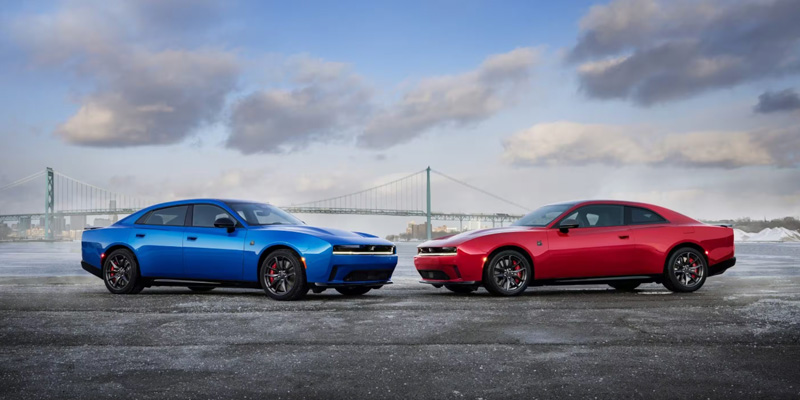
The Charger moves forward with a redesigned shape that blends aerodynamics with aggressive styling. It is available in both 2-door and 4-door configurations, giving it more flexibility than previous muscle cars.
Inside, the layout is fully modern. A digital instrument cluster, a 12.3-inch Uconnect® touchscreen, and customizable ambient lighting create a more connected driving environment.
The Challenger remained rooted in its original formula. Its long hood, wide stance, and coupe-only design reflect classic muscle proportions. The styling leans heavily into nostalgia, which is part of its appeal.
Technology That Changes the Driving Experience
The Charger introduces a higher level of integration between performance and technology. Drive modes, digital displays, and steering wheel controls allow drivers to adjust the vehicle’s behavior in real time.
Features like PowerShot in Daytona models add short bursts of additional power, reinforcing its performance focus in a more modern way.
The Challenger offered performance-focused tools like launch control and performance pages, but its technology remained more traditional. It emphasizes mechanical performance over digital customization.
Which One Fits Your Driving Style?
The Charger is built for drivers who want performance with more control and versatility. AWD, updated powertrains, and modern tech make it easier to use every day while still delivering strong acceleration.
The Challenger appeals to drivers who want a more traditional experience. Rear-wheel drive, high-output V8 engines, and a focus on straight-line speed define its character.
See What Modern Muscle Looks Like in Charlevoix, MI
The 2026 Dodge Charger brings a new direction to muscle cars while still carrying the attitude that defines the segment. Visit Charlevoix CDJR to explore the Charger in person and schedule a test drive online. It offers a different kind of performance, built for how drivers use their cars today.
Connect with us


Archives
- 2025 Dodge Hornet
- 2026 Dodge Charger
- 2026 Dodge Charger vs Dodge Challenger
- 2026 Jeep Wrangler
- Charlevoix CDJR
- Charlevoix CDJR Service
- Charlevoix Chrysler Dealership
- Charlevoix Chrysler Dodge Jeep Ram Service
- Charlevoix Dodge Dealership
- Charlevoix Jeep Dealer
- Charlevoix Ram Trucks
- Chrysler Maintenance
- Chrysler Pacifica
- Chrysler Pacifica Features
- Dodge dealership in Charlevoix MI
- Jeep Wrangler
- Jeep Wrangler Features
- New Cars
- Petoskey Chrysler Dealer
- Ram 2500
- RAM 3500
- RAM Maintenance
- Spring Maintenance
- Towing capabilities
- Uncategorized